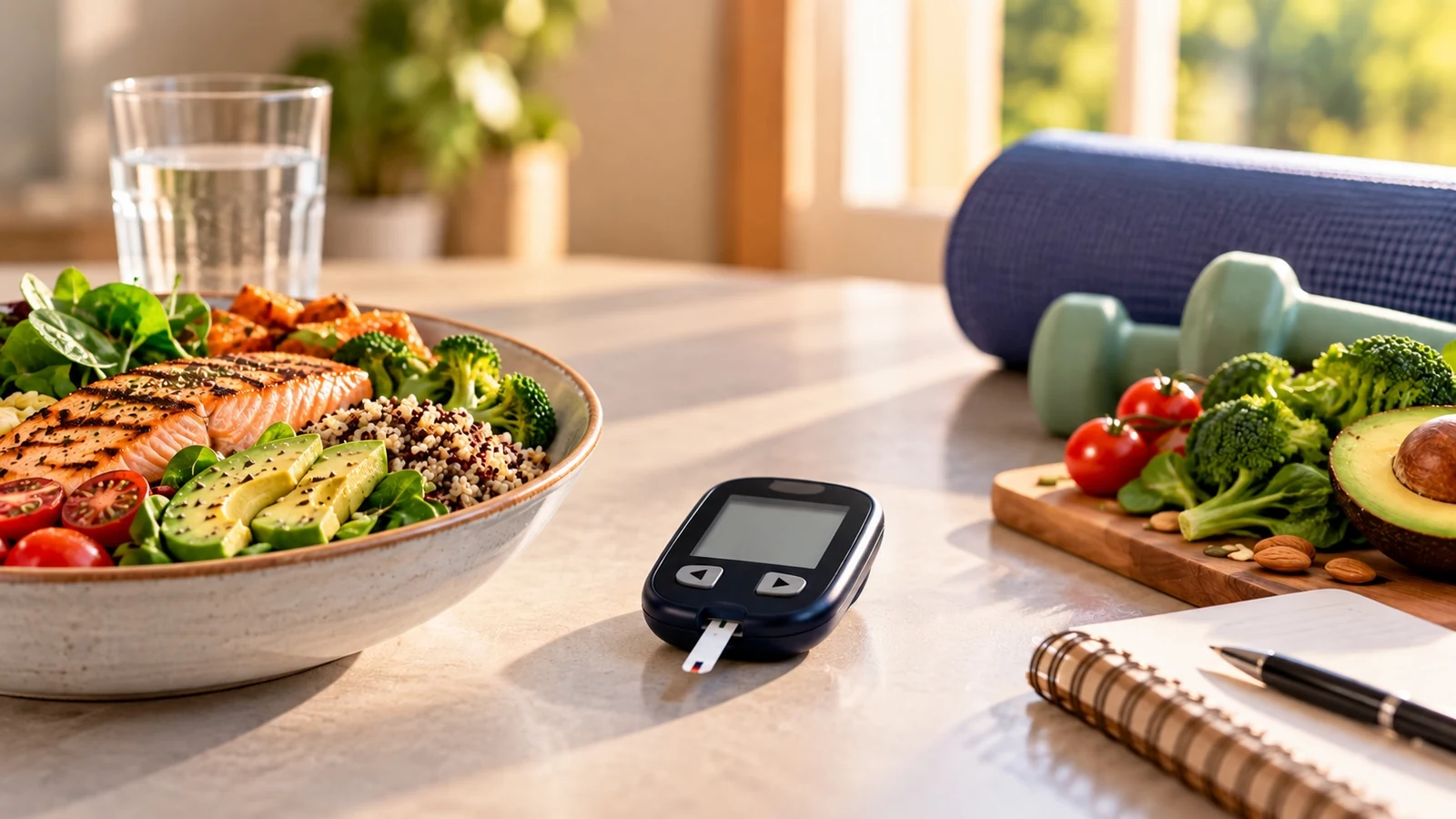
How can I lower my blood sugar? What actually helps
How weight, food choices, activity and sleep affect blood sugar, and what sustained changes can mean for HbA1c.
· 6 min read
Lowering blood sugar takes a combination of changes rather than a single fix. The main levers are weight, physical activity and what you eat and drink. Losing some weight if you carry extra, aiming for 150 minutes of moderate activity a week, and cutting refined carbohydrates and sugary drinks together lower your day-to-day blood sugar and, over time, your HbA1c — the test that reflects your average blood sugar over about 3 months.
Regular sleep supports all of this. Changes you can keep up for months show in your results more than a short burst of effort.
What changes lower blood sugar the most?
The changes that help the most are the ones that address different parts of the same problem: insulin resistance.
Each lever acts in its own way. Losing extra weight, especially around the belly, makes your body's cells more responsive to insulin — the hormone that moves sugar from your blood into your cells. Physical activity has an immediate effect, because working muscles pull sugar from the blood for fuel, and done regularly it also makes cells respond better to insulin. Food choices change how much sugar enters the blood after a meal, and how quickly. Better sleep and managing stress keep hormones that raise blood sugar in check.
Singapore's clinical guidance for type 2 diabetes lists the same habits for day-to-day management: a balanced diet, a healthy weight, regular exercise, limiting alcohol, quitting smoking and managing stress. For most people, this combination has a bigger effect than any single change on its own.
Does losing weight lower blood sugar?
Yes. Losing weight makes your body more sensitive to insulin, so the same meal raises your blood sugar less. For people with prediabetes, Singapore's ACE guidance recommends a 5 to 10% weight loss to prevent or delay type 2 diabetes. For someone who weighs 70 kg, that is about 3.5 to 7 kg.
Diet and exercise together lead to more weight loss than exercise alone. For Asians, diabetes risk starts to rise at a lower body weight than the usual definition of overweight, so this applies even if you do not think of yourself as heavy.
How much exercise helps lower blood sugar?
Aim for 150 minutes of moderate activity a week, such as brisk walking. HealthHub also recommends strength training on at least 2 days a week. Moderate means you can talk but not sing.
Activity lowers blood sugar in the short term, and done regularly it also lowers HbA1c. Working muscles take up sugar for energy, so a walk after your biggest meal is an easy habit to build. If you take insulin or certain diabetes tablets, ask your doctor how to exercise safely, because activity can push blood sugar too low.
What should I eat to keep my blood sugar steady?
Build meals around vegetables, wholegrains and lean protein, and cut back on sugary drinks. The Health Promotion Board's My Healthy Plate shows the proportions: half the plate fruit and vegetables, a quarter wholegrains and a quarter protein.
Carbohydrates have the biggest effect on blood sugar, so the amount and type you eat matter most. Choose wholegrains like brown rice, wholemeal bread and oats over their refined versions — the fibre in them slows how quickly sugar enters your blood. Pairing carbohydrates with protein and vegetables has a similar effect.
Drinks are the easiest place to start. Water is the best choice; cut sugar in your coffee or tea, and swap sweet drinks and fruit juice for water or unsweetened alternatives.
Does white rice raise blood sugar?
Yes. White rice raises blood sugar quickly, but the portion, the type of rice and what you eat with it all change how much. HealthHub notes that brown rice raises blood sugar more gradually than white rice. Porridge raises it more than the same amount of boiled rice, and rice eaten with meat and vegetable dishes has a smaller effect than rice on its own.
You do not need to give up rice. Mix some brown rice into white rice at home, ask for less rice at the hawker centre, and fill the space on your plate with vegetables and protein.
Can poor sleep affect blood sugar?
Yes. Short or poor-quality sleep, night after night, is linked to higher HbA1c in people with type 2 diabetes. HealthHub notes that diabetes and prediabetes are linked to sleep problems such as obstructive sleep apnoea. It suggests a regular bedtime and wake time, no caffeine, alcohol or nicotine 4 to 6 hours before bed, and screens off at least 30 minutes before.
The occasional late night is less of a worry. A Singapore study of healthy university students found that one night of shorter sleep did not change how their bodies handled sugar the next morning, so a steady routine is what to aim for.
How long does it take to lower HbA1c?
There is no fixed timeline, but about 3 months is a reasonable expectation. The HbA1c test reflects your average blood sugar over roughly that period, so sustained changes in habits — especially around weight, activity and diet — show up on the next test when kept up consistently. Day-to-day blood sugar responds much sooner.
How quickly it moves varies by person, by starting point, and by how fully the changes are kept up. A test taken earlier will not show the full effect, so ask your doctor when to recheck. People with prediabetes are usually followed up at least every 6 months.
Lowering blood sugar is a long game, and seeing the progress keeps you going. When you add your past and recent health screening reports to the Health Locker in the Genie Health app, Genie reads values like fasting glucose and HbA1c from each report and organises them into Health Pillars, so you see your blood sugar readings side by side over time. If you also connect a wearable such as Fitbit, Whoop, Apple Health or Oura, Genie's Sparks surface links between your activity, sleep and the numbers on your reports — showing whether your changes are translating into lower readings, and giving you a complete picture to take to your doctor's next appointment.
Can I lower high blood sugar quickly?
High blood sugar is not something to bring down quickly on your own. A single reading can be brought down a little by drinking water and taking a light walk, but the real change comes from the habits above, kept up over months. Home remedies and supplements sold for this are not a safe shortcut.
If a reading is much higher than usual, or you feel unwell, contact your doctor or another healthcare practitioner. If you have diabetes, follow the advice your care team has given you for high readings.
FAQs
- What changes lower blood sugar the most?
- The changes that help the most are the ones that address different parts of the same problem: insulin resistance.
- Does losing weight lower blood sugar?
- Yes. Losing weight makes your body more sensitive to insulin, so the same meal raises your blood sugar less. For people with prediabetes, Singapore's ACE guidance recommends a 5 to 10% weight loss to prevent or delay type 2 diabetes. For someone who weighs 70 kg, that is about 3.5 to 7 kg.
- How much exercise helps lower blood sugar?
- Aim for 150 minutes of moderate activity a week, such as brisk walking. HealthHub also recommends strength training on at least 2 days a week. Moderate means you can talk but not sing.
- What should I eat to keep my blood sugar steady?
- Build meals around vegetables, wholegrains and lean protein, and cut back on sugary drinks. The Health Promotion Board's My Healthy Plate shows the proportions: half the plate fruit and vegetables, a quarter wholegrains and a quarter protein.
- Does white rice raise blood sugar?
- Yes. White rice raises blood sugar quickly, but the portion, the type of rice and what you eat with it all change how much. HealthHub notes that brown rice raises blood sugar more gradually than white rice. Porridge raises it more than the same amount of boiled rice, and rice eaten with meat and vegetable dishes has a smaller effect than rice on its own.
- Can poor sleep affect blood sugar?
- Yes. Short or poor-quality sleep, night after night, is linked to higher HbA1c in people with type 2 diabetes. HealthHub notes that diabetes and prediabetes are linked to sleep problems such as obstructive sleep apnoea. It suggests a regular bedtime and wake time, no caffeine, alcohol or nicotine 4 to 6 hours before bed, and screens off at least 30 minutes before.
- How long does it take to lower HbA1c?
- There is no fixed timeline, but about 3 months is a reasonable expectation. The HbA1c test reflects your average blood sugar over roughly that period, so sustained changes in habits — especially around weight, activity and diet — show up on the next test when kept up consistently. Day-to-day blood sugar responds much sooner.
- Can I lower high blood sugar quickly?
- High blood sugar is not something to bring down quickly on your own. A single reading can be brought down a little by drinking water and taking a light walk, but the real change comes from the habits above, kept up over months. Home remedies and supplements sold for this are not a safe shortcut.
References & Sources
- Type 2 diabetes mellitus – personalising management (ACE Clinical Guidance, 2023) https://isomer-user-content.by.gov.sg/68/7f841d63-4e01-4b61-a507-79dc0131385a/T2DM%20%E2%80%93%20personalising%20management%20%5BPDF%5D.pdf
- Managing pre-diabetes – a growing health concern (ACE Clinical Guidance, 2021) https://isomer-user-content.by.gov.sg/68/0ef87883-11d0-42cb-bc2a-92b684dc9bfe/Managing%20pre-diabetes%20-%20a%20growing%20health%20concern%20%28Jul%202021%29%20%5BPDF%5D.pdf
- Physical activity tips https://www.healthhub.sg/programmes/diabetes-hub/physical-activity-tips
- Plan Your Meals with My Healthy Plate https://healthhub.sg/live-healthy/plan-your-meals-with-my-healthy-plate
- Understanding carbohydrates https://www.healthhub.sg/programmes/diabetes-hub/understanding-carbohydrates
- Sleeping well tips https://www.healthhub.sg/programmes/diabetes-hub/sleeping-well-tips
Note: This content is for general informational purposes only and is not medical advice, diagnosis or treatment. It does not replace consultation with a qualified healthcare professional. If you have concerns about your health, please consult a qualified physician.
Read Next: How often should I check my blood sugar, and how do I test it at home?
You might also like
My blood sugar is high. What is a normal blood sugar level?
Understand Singapore’s blood sugar ranges, what a high result can mean, and why trends and follow-up testing matter.
Metabolic Health · · 7 min read
What is HbA1c, and what is a normal HbA1c level?
Understand what HbA1c measures, Singapore’s screening ranges, and why it can differ from a fasting blood glucose result.
Metabolic Health · · 6 min read
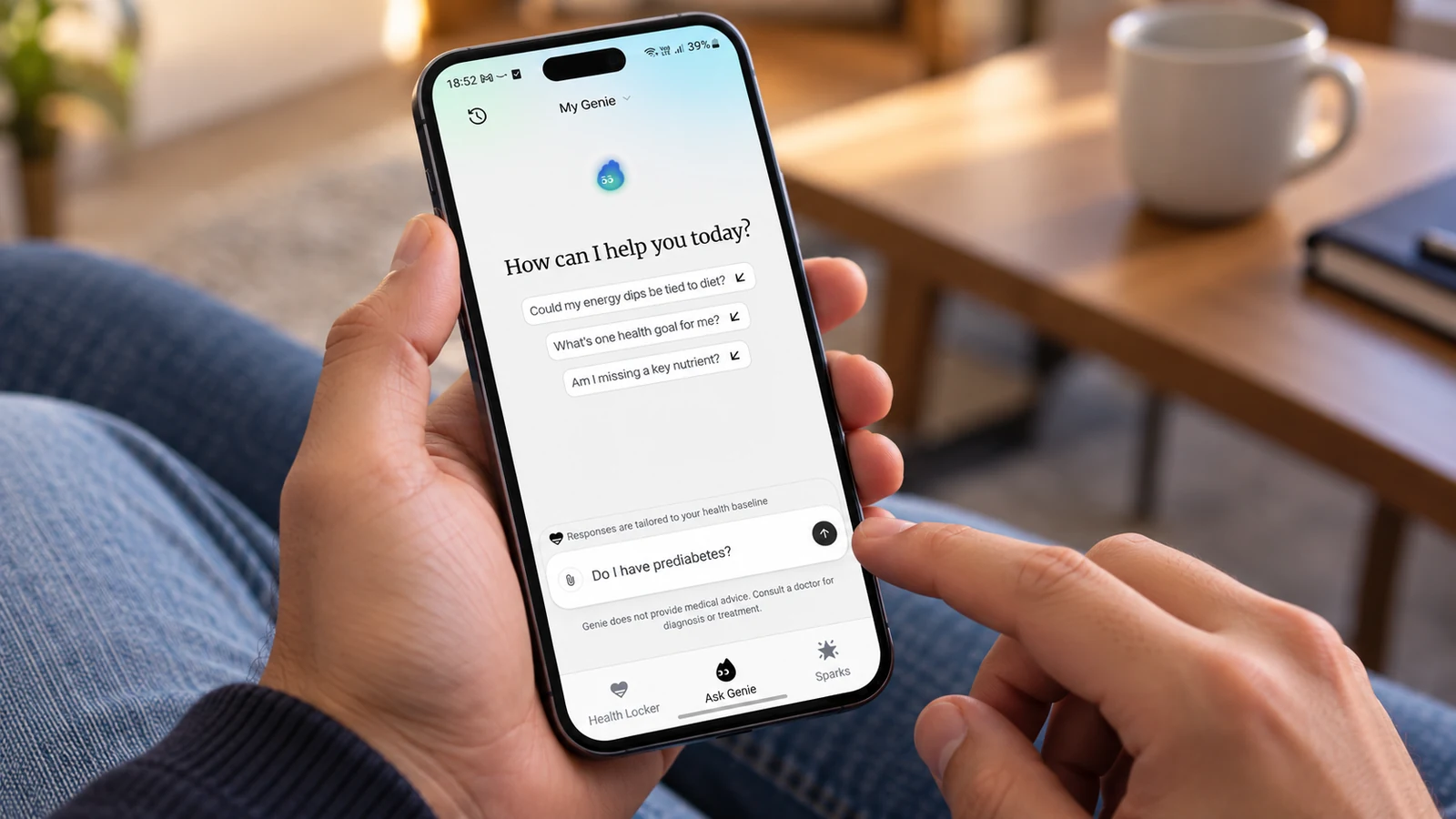
What is prediabetes, and can it be reversed?
Understand Singapore’s prediabetes ranges, common risk factors, and how sustained lifestyle changes can help.
Metabolic Health · · 5 min read