What is prediabetes, and can it be reversed?
Understand Singapore’s prediabetes ranges, common risk factors, and how sustained lifestyle changes can help.
· 5 min read
Prediabetes means your blood sugar is above the normal range but has not yet crossed into diabetes. In Singapore, a fasting glucose of 6.1 to 6.9 mmol/L, or a reading of 7.8 to 11.0 mmol/L two hours after a glucose tolerance test, indicates prediabetes.
Prediabetes usually causes no symptoms, so it is often picked up only on a routine screening. Catching it matters because this is an early stage, when the body is still responding to changes and the condition is reversible. Acting early can bring blood sugar back into the normal range, and in some cases, prevent diabetes altogether.
What is prediabetes?
Prediabetes is when your blood sugar is higher than normal but not high enough for a diabetes diagnosis.
A fasting glucose of 6.1 to 6.9 mmol/L is called impaired fasting glucose. A result of 7.8 to 11.0 mmol/L two hours after a sugary drink, in an oral glucose tolerance test (OGTT), is called impaired glucose tolerance. mmol/L is the unit Singapore labs use for blood sugar, and the blood sugar level chart also shows the normal and diabetes levels.
US guidance starts prediabetes at a lower fasting level, so a result a US website calls prediabetes may be normal here. HbA1c alone is not used in Singapore to diagnose prediabetes. See the HbA1c guide for how it is used here.
Prediabetes is common in Singapore. The Ministry of Health estimates that about 14% of Singaporeans aged 18 to 69, around 430,000 people, have prediabetes. In a 2024 survey by NUS and Diabetes Singapore at community screening events, almost 40% of participants had prediabetes, and almost 70% of them thought they did not have diabetes. Those were people attending screening, not a national sample, but it shows how easily prediabetes goes unnoticed. A result in this range deserves attention even if you feel well.
Does prediabetes have symptoms?
Usually not. Only a blood test can find it.
Some people notice signs more typical of diabetes, such as thirst, passing urine more often, tiredness or blurred vision. These can mean blood sugar has climbed further, so get tested soon. Darker, velvety patches of skin on the back of the neck or in the armpits, called acanthosis nigricans, are another sign linked to insulin resistance.
Singapore recommends diabetes screening every 3 years from age 40, or at any age if you have a risk factor.
What causes prediabetes, and who is at higher risk?
Prediabetes is driven by a combination of lifestyle factors, hereditary risk and age.
The main risk factors are:
- A parent or sibling with type 2 diabetes
- Age 40 or above
- A body mass index (BMI) of 23 or higher
- Little physical activity, and a diet high in refined carbohydrates and sugar
- A history of gestational diabetes
The BMI cut-off of 23 sits below the usual overweight level of 25 because Asians tend to develop diabetes at a lower weight. Singapore's screening guidance also counts high blood pressure, and low HDL ("good") cholesterol or high triglycerides, as risk factors.
Prediabetes develops through a chain that builds over years. Lifestyle habits and hereditary risk make the body's cells less responsive to insulin. Insulin is the hormone that moves sugar from your blood into your cells, and this reduced response is called insulin resistance. To compensate, the pancreas produces more insulin to keep blood sugar normal, often for years. Prediabetes is the stage where it begins to fall behind, and blood sugar starts to show up as elevated on a test.
If a parent or sibling has type 2 diabetes, multiple studies suggest your own risk is roughly double. The family history guide covers what to track.
Will prediabetes turn into diabetes?
It can, but it does not have to. Without changes, about one in three people with prediabetes develop type 2 diabetes within eight years. Prediabetes also raises the risk of heart and blood vessel disease.
A Singapore study that followed adults with impaired glucose tolerance through the 1990s found that, eight years later, 41% had returned to normal blood sugar. About a quarter were still in the prediabetes range and about a third had developed diabetes. Gaining weight makes progression more likely.
Can prediabetes be reversed, and how long does it take?
Yes, for many people. Lifestyle changes such as healthy eating can delay diabetes or reverse prediabetes, and Singapore guidance puts these changes first, ahead of medicine.
If you are overweight, aim to lose 5 to 10% of your body weight, or to reach a BMI below 23. For someone who weighs 80 kg, 5% is 4 kg. Add at least 150 minutes of moderate activity a week, such as brisk walking, with no more than two days in a row off. For specific food and activity steps, see how to lower blood sugar.
No guideline promises reversal within a set time. Of about 150 people who joined the Health Promotion Board's 12-week prediabetes programme by 2017, more than half had normal glucose a year later. Prediabetes can return if the old habits do, so keep the changes going.
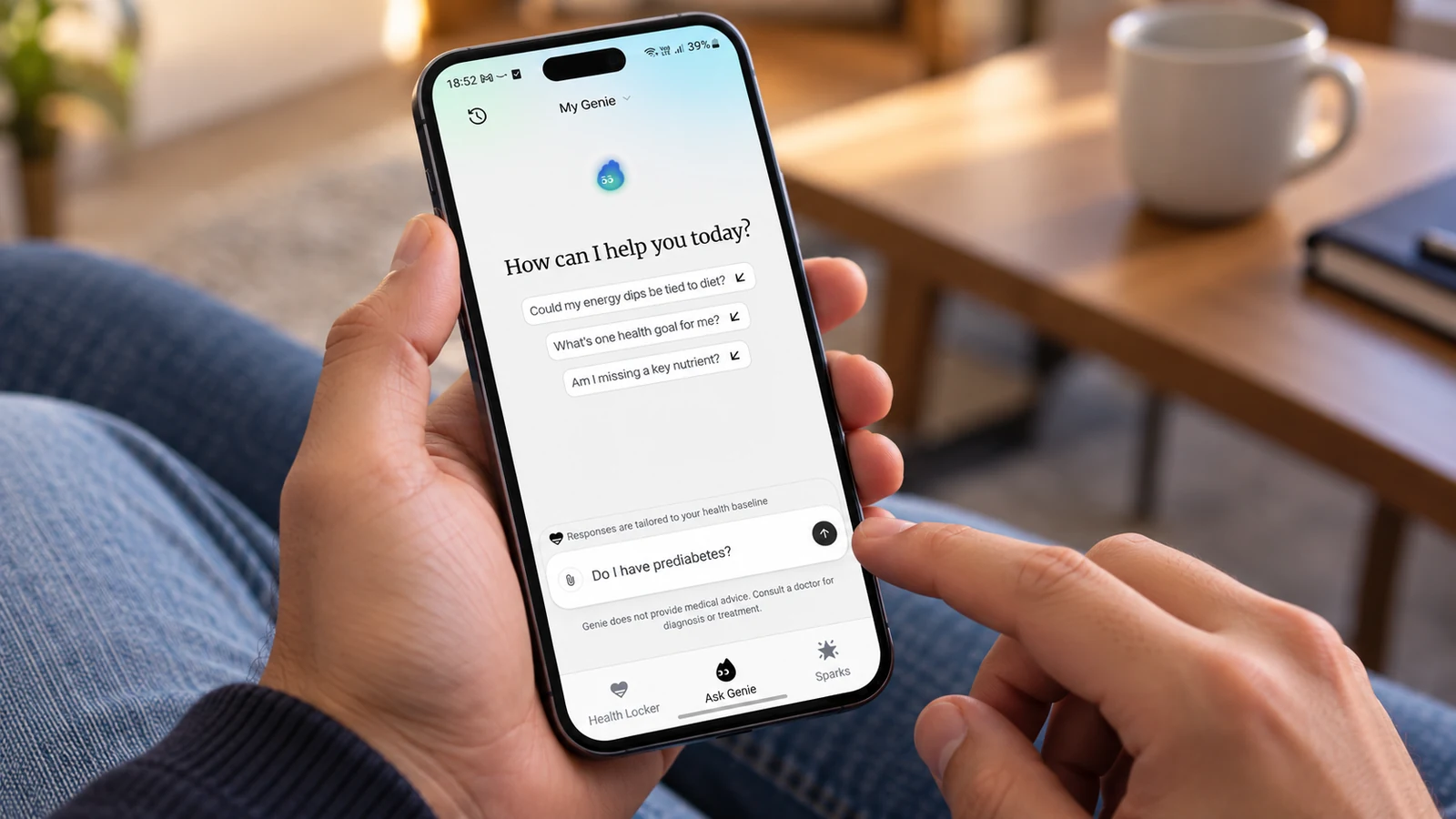
If you are working on lifestyle changes, you can securely add your past and recent health screening reports to the Health Locker in the Genie Health app and connect a wearable such as Fitbit, Whoop, Apple Health or Oura. Genie reads your glucose and HbA1c values from each report, along with activity and sleep patterns from your wearable, and surfaces the links between the two. You can also ask Genie to compare your wearable data against the readings in your reports, so you can see whether your changes are moving the numbers and whether what you are doing is working.
FAQs
- What is prediabetes?
- Prediabetes is when your blood sugar is higher than normal but not high enough for a diabetes diagnosis.
- Does prediabetes have symptoms?
- Usually not. Only a blood test can find it.
- What causes prediabetes, and who is at higher risk?
- Prediabetes is driven by a combination of lifestyle factors, hereditary risk and age.
- Will prediabetes turn into diabetes?
- It can, but it does not have to. Without changes, about one in three people with prediabetes develop type 2 diabetes within eight years. Prediabetes also raises the risk of heart and blood vessel disease.
- Can prediabetes be reversed, and how long does it take?
- Yes, for many people. Lifestyle changes such as healthy eating can delay diabetes or reverse prediabetes, and Singapore guidance puts these changes first, ahead of medicine.
References & Sources
- Types of diabetes https://www.healthhub.sg/programmes/diabetes-hub/types-of-diabetes
- Managing pre-diabetes – a growing health concern (ACE Clinical Guidance, 2021) https://isomer-user-content.by.gov.sg/68/0ef87883-11d0-42cb-bc2a-92b684dc9bfe/Managing%20pre-diabetes%20-%20a%20growing%20health%20concern%20%28Jul%202021%29%20%5BPDF%5D.pdf
- Ministry of Health studying measures to better support persons with pre-diabetes https://www.moh.gov.sg/newsroom/ministry-of-health-studying-measures-to-better-support-persons-with-pre-diabetes/
- Diabetes Perception Report (NUS IPUR and Diabetes Singapore, 2024) https://ipur.nus.edu.sg/wp-content/uploads/2024/11/Diabetes-Perception-Report-1.pdf
- A family history of type 2 diabetes is associated with glucose intolerance and obesity-related traits with evidence of excess maternal transmission for obesity-related traits in a South East Asian population https://europepmc.org/abstract/MED/18804306
- The Singapore impaired glucose tolerance follow-up study: does the ticking clock go backward as well as forward? https://pubmed.ncbi.nlm.nih.gov/14578234/
Note: This content is for general informational purposes only and is not medical advice, diagnosis or treatment. It does not replace consultation with a qualified healthcare professional. If you have concerns about your health, please consult a qualified physician.
Read Next: Why has my blood sugar or HbA1c gone up?
You might also like
My blood sugar is high. What is a normal blood sugar level?
Understand Singapore’s blood sugar ranges, what a high result can mean, and why trends and follow-up testing matter.
Metabolic Health · · 7 min read
What is HbA1c, and what is a normal HbA1c level?
Understand what HbA1c measures, Singapore’s screening ranges, and why it can differ from a fasting blood glucose result.
Metabolic Health · · 6 min read

Why has my blood sugar or HbA1c gone up?
Explore why blood sugar or HbA1c may rise, from everyday changes and medicines to patterns across health screenings.
Metabolic Health · · 5 min read