What is prediabetes, and can it be reversed?
Prediabetes means your blood sugar is above the normal range but has not yet crossed into diabetes. In Malaysia, a fasting glucose of 6.1–6.9 mmol/L, or a reading of 7.8–11.0 mmol/L two hours after the glucose drink in an oral glucose tolerance test (OGTT), indicates prediabetes.
· 5 min read
Prediabetes usually causes no symptoms, so it is often picked up only on a routine screening. Catching it matters because this is an early stage, when the body is still responding to changes and the condition is reversible. Acting early can bring blood sugar back into the normal range, and in some cases, prevent diabetes altogether.
What is prediabetes?
Prediabetes is when your blood sugar is higher than normal but not high enough for a diabetes diagnosis.
A fasting glucose of 6.1–6.9 mmol/L is called impaired fasting glucose. A result of 7.8–11.0 mmol/L two hours after the glucose drink in an oral glucose tolerance test (OGTT) is called impaired glucose tolerance. According to Malaysia’s type 2 diabetes guideline, HbA1c of 5.7% to below 6.3% is also in the prediabetes range.
The blood sugar level chart also shows the normal and diabetes levels. Glucose is shown in mmol/L, while HbA1c is a percentage. The HbA1c guide explains what that test measures.
These ranges are for adults who are not pregnant; pregnancy uses different testing and thresholds.
A result in this range deserves attention even if you feel well.
Does prediabetes have symptoms?
Usually not. Only a blood test can find it.
Some people notice signs more typical of diabetes, such as thirst, passing urine more often, tiredness or blurred vision. These can mean blood sugar has climbed further, so get tested soon. Darker, velvety patches of skin on the back of the neck or in the armpits, called acanthosis nigricans, are another sign linked to insulin resistance.
According to Malaysia’s type 2 diabetes guideline, adults over 30 should have annual risk-based screening, with earlier testing when risk factors are present. People with prediabetes should be tested yearly. New symptoms or a new high result may need earlier assessment.
What causes prediabetes, and who is at higher risk?
Prediabetes is driven by a combination of lifestyle factors, hereditary risk and age.
The main risk factors are:
- A parent or sibling with type 2 diabetes
- Increasing age
- Excess body fat or a larger waist size
- Little physical activity, and a diet high in refined carbohydrates and sugar
- A history of gestational diabetes
High blood pressure, low HDL ("good") cholesterol and high triglycerides are also linked to higher risk. People of Asian background can develop diabetes at a lower BMI, so weight is not the only factor to consider.
Prediabetes develops through a chain that builds over years. Lifestyle habits and hereditary risk make the body's cells less responsive to insulin. Insulin is the hormone that moves sugar from your blood into your cells, and this reduced response is called insulin resistance. To compensate, the pancreas produces more insulin to keep blood sugar normal, often for years. Prediabetes is the stage where it begins to fall behind, and blood sugar starts to show up as elevated on a test.
If a parent or sibling has type 2 diabetes, your own risk is higher. The family history guide covers what to track.
Will prediabetes turn into diabetes?
It can, but it does not have to. Some people return to normal blood sugar, some remain in the prediabetes range, and some develop type 2 diabetes. Your risk depends on factors such as your blood sugar levels, family history, weight and activity.
Healthy eating, regular activity and weight management can reduce the risk of progression. Prediabetes is also linked to a higher risk of heart and blood vessel disease, so blood pressure and cholesterol matter too.
Can prediabetes be reversed, and how long does it take?
Yes, for many people. Lifestyle changes such as healthy eating and regular activity can bring blood sugar back into the normal range and help prevent or delay type 2 diabetes.
If you are overweight, losing 5–7% of your starting body weight can help reduce your risk. For someone who weighs 80 kg, 5% is 4 kg. Weight loss is not a recommendation for everyone, so the goal should fit your starting weight and health. Add at least 150 minutes of moderate activity a week, such as brisk walking, with no more than two days in a row off. For specific food and activity steps, see how to lower blood sugar.
There is no fixed time for prediabetes to return to the normal range. Your doctor can agree when to repeat your blood tests to see how things are changing. Prediabetes can return even after blood sugar improves, so keep the healthier habits and follow-up going.
Lifestyle changes are the foundation of prevention. Some people at higher risk may also benefit from medicine; your doctor can advise whether it is appropriate.
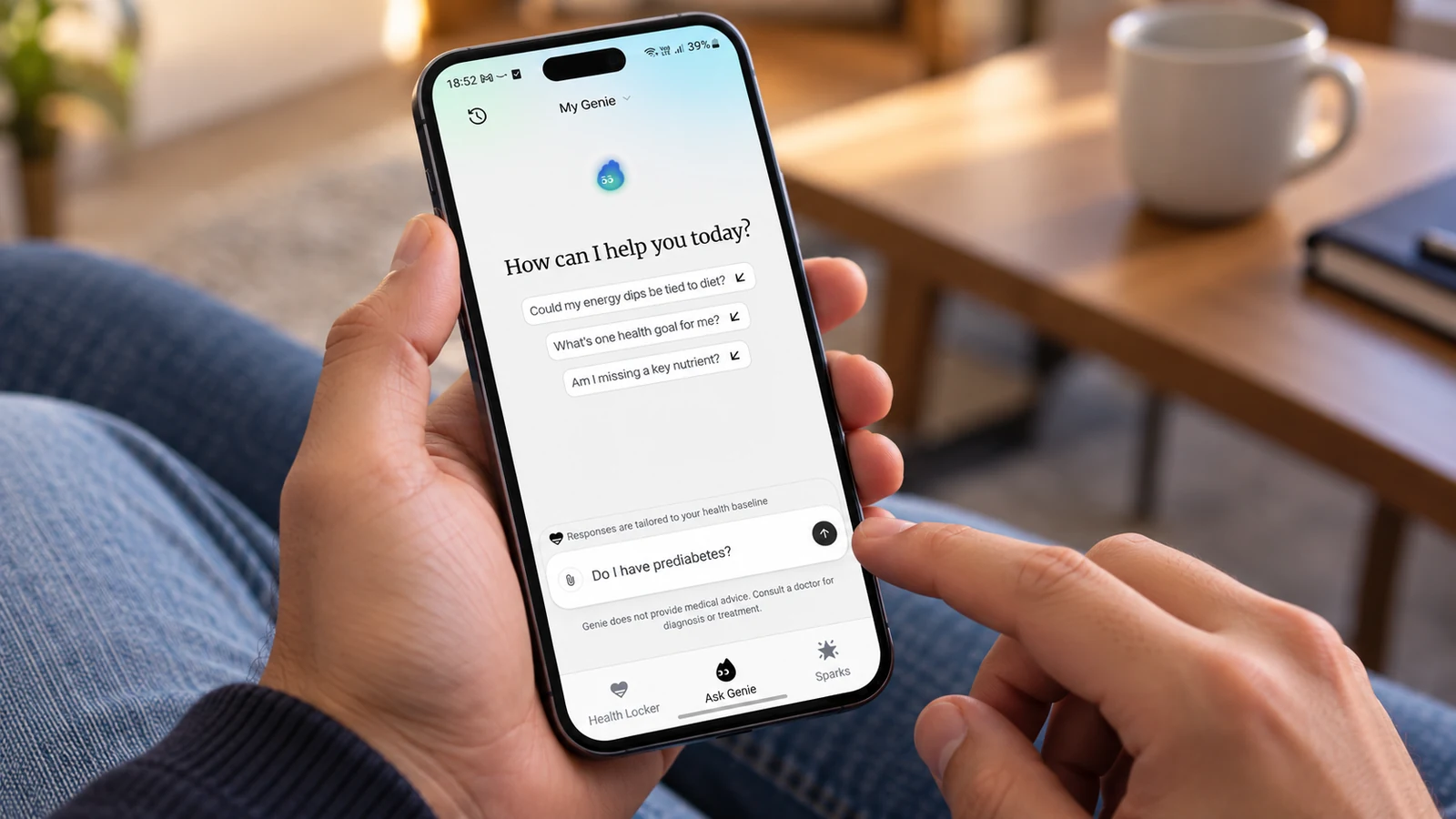
If you are working on lifestyle changes, you can securely add your past and recent health screening reports to the Health Locker in the Genie Health app and connect a wearable such as Fitbit, Whoop, Apple Health or Oura. Genie reads your glucose and HbA1c values from each report, along with activity and sleep patterns from your wearable, and surfaces the links between the two. You can also ask Genie to compare your wearable data against the readings in your reports, so you can see whether your changes are moving the numbers and whether what you are doing is working.
FAQs
- What is prediabetes?
- Prediabetes is when your blood sugar is higher than normal but not high enough for a diabetes diagnosis.
- Does prediabetes have symptoms?
- Usually not. Only a blood test can find it.
- What causes prediabetes, and who is at higher risk?
- Prediabetes is driven by a combination of lifestyle factors, hereditary risk and age.
- Will prediabetes turn into diabetes?
- It can, but it does not have to. Some people return to normal blood sugar, some remain in the prediabetes range, and some develop type 2 diabetes. Healthy eating, regular activity and weight management can reduce the risk of progression.
- Can prediabetes be reversed, and how long does it take?
- Yes, for many people. Healthy eating, regular activity and appropriate weight management can bring blood sugar back into the normal range and help prevent or delay type 2 diabetes. There is no fixed time for this to happen, and continued follow-up matters even after your results improve.
References & Sources
- https://www.niddk.nih.gov/health-information/diabetes/overview/what-is-diabetes/prediabetes-insulin-resistance https://www.niddk.nih.gov/health-information/diabetes/overview/what-is-diabetes/prediabetes-insulin-resistance
- https://www.moh.gov.my/images/04-penerbitan/penerbitan-klinikal/panduan-amalan-klinikal/CPG_T2DM_6th_Edition_2020_13042021.pdf https://www.moh.gov.my/images/04-penerbitan/penerbitan-klinikal/panduan-amalan-klinikal/CPG_T2DM_6th_Edition_2020_13042021.pdf
- https://www.racgp.org.au/clinical-resources/clinical-guidelines/key-racgp-guidelines/view-all-racgp-guidelines/management-of-type-2-diabetes/preventing-progression-to-type-2-diabetes https://www.racgp.org.au/clinical-resources/clinical-guidelines/key-racgp-guidelines/view-all-racgp-guidelines/management-of-type-2-diabetes/preventing-progression-to-type-2-diabetes
Note: This content is for general informational purposes only and is not medical advice, diagnosis or treatment. It does not replace consultation with a qualified healthcare professional. If you have concerns about your health, please consult a qualified physician.
Read Next: Why has my blood sugar or HbA1c gone up?