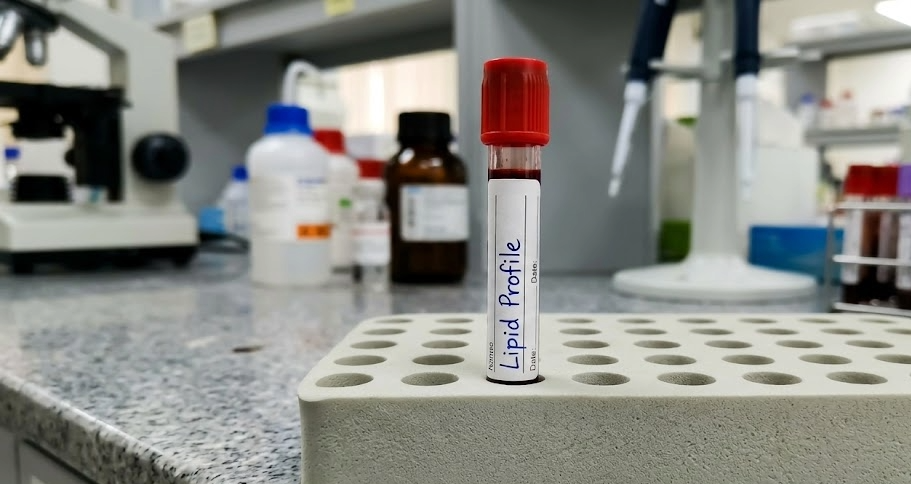
LDL, HDL and triglycerides explained: which cholesterol number matters?
When it comes to heart risk, LDL cholesterol (low-density lipoprotein) is usually the number doctors focus on first. But LDL alone does not tell the full story. A complete lipid panel, covering LDL, HDL (high-density lipoprotein), triglycerides and total cholesterol, gives a far more accurate picture. This guide breaks down what each marker does, why total cholesterol can be deceptive, and how these numbers work together.
· 6 min read
What is total cholesterol?
Total cholesterol is the total amount of cholesterol in your blood. It is usually measured directly. LDL cholesterol may be calculated from the other lipid-panel results or measured directly, depending on the laboratory method.
It serves as a quick screening tool and is needed to calculate metrics like non-HDL cholesterol. But two people with the same total cholesterol can have very different risk profiles. A high reading can be driven by high "good" HDL rather than elevated LDL. A "normal" score can mask dangerously high LDL if HDL is very low.
What is LDL cholesterol?
LDL (low-density lipoprotein) carries cholesterol from the liver to tissues and cells. It is called "bad" cholesterol because when levels exceed what cells need, excess particles penetrate artery walls, oxidise and form plaque (atherosclerosis), narrowing blood vessels over time.
Not all LDL particles behave identically. Smaller, denser particles penetrate artery walls more easily and are more susceptible to oxidation, posing higher risk than larger, buoyant particles.
LDL remains the primary target for cholesterol-lowering treatment across global guidelines, though individual LDL goals depend on age, family history, diabetes status and previous cardiovascular events.
What is HDL cholesterol?
HDL (high-density lipoprotein) is called "good" cholesterol because it collects excess cholesterol from the bloodstream and artery walls and carries it back to the liver for disposal, a process called reverse cholesterol transport. HDL particles also have anti-inflammatory and antioxidant properties that help protect blood vessel linings.
That said, high HDL does not cancel out the risk from elevated LDL. And more is not always better. Some studies show a U-shaped association, with very high HDL linked to higher risk in some populations. This does not prove that HDL itself causes harm. Genetics and lifestyle can both influence HDL levels.
Which cholesterol is bad and which is good?
LDL is "bad" because excess particles deposit inside artery walls and drive atherosclerosis. HDL is "good" because it collects excess cholesterol and returns it to the liver.
But these labels are simplifications. Cholesterol itself is essential for building cells, producing hormones and synthesising vitamin D. LDL becomes harmful only when there is too much in circulation, and high HDL does not erase the risks of high LDL. What matters is how these markers balance alongside triglycerides and broader health factors.
What are triglycerides?
Triglycerides are the most common type of fat in the body. Unlike cholesterol, which builds cells and hormones, triglycerides store unused calories and provide energy between meals.
High levels can be related to excess calories, refined carbohydrates, sugar, alcohol and inactivity, as well as inherited factors or conditions such as diabetes. A pattern of high triglycerides, low HDL and smaller, denser LDL particles is called atherogenic dyslipidaemia. It is associated with insulin resistance and metabolic syndrome, and can occur even when the LDL cholesterol concentration is not high.
Australian Pathology Tests Explained lists triglycerides of 2.0 mmol/L or above as a laboratory flag for review. This is not a universal severity category or a personal treatment target. Check the reference range on your own report and whether the sample was fasting.
How to interpret cholesterol ratios?
Lipid panels often include derived ratios. Two are especially useful:
Total cholesterol-to-HDL ratio (TC/HDL): Total cholesterol divided by HDL. A lower ratio means a higher proportion of HDL, but the ratio does not replace assessment of individual lipid results and overall risk. There is no single universal treatment target for this ratio.
Triglyceride-to-HDL ratio (TG/HDL): A proxy marker for insulin resistance and small, dense LDL concentration. Proposed cutoffs vary between populations, and the numerical value depends on the units used for triglycerides and HDL. The ratio should not be used on its own to diagnose insulin resistance.
A favourable ratio does not make high LDL safe. Doctors evaluate absolute numbers first, then use ratios to refine risk assessment.
Which cholesterol number matters most for heart risk?
LDL remains the primary focus because LDL particles directly build up in artery walls. Triglycerides act as a secondary signal, particularly for metabolic issues. HDL is supportive but secondary to LDL.
No number is read in isolation. Overall risk depends on how all numbers align alongside blood pressure, blood sugar and family history.
What are Lp(a), ApoB and eGFR? Should I test for these?
Beyond the standard lipid panel, advanced biomarkers can refine risk assessment:
ApoB (Apolipoprotein B) is a protein on every plaque-forming particle (LDL, VLDL, IDL). It measures exact particle count rather than cholesterol volume, making it a strong predictor of heart disease, especially with high triglycerides.
Lp(a) (Lipoprotein a) is an LDL-like particle whose level is largely inherited. A high level can add to cardiovascular risk. Australian recommendations support considering testing in people with a family history of raised Lp(a) or early cardiovascular disease, or other increased risk. Ask your doctor whether testing is appropriate for you. A healthy lifestyle remains important even though it usually has little effect on Lp(a) itself.
eGFR (Estimated Glomerular Filtration Rate) estimates kidney function. Chronic kidney disease increases cardiovascular risk and can influence how aggressively cholesterol needs to be managed.
ApoB and Lp(a) are not usually included in a standard lipid panel, while eGFR may already be available from a kidney-function blood test. Your doctor can explain which additional tests would help assess your risk. Recommendations for Lp(a) testing differ between countries.
Looking beyond cholesterol: how doctors calculate overall heart risk
Cholesterol is one part of your cardiovascular picture. Blood pressure, blood glucose, smoking, weight, activity and family history all provide essential context.
In Australia, a Heart Health Check brings cholesterol results together with blood pressure and other risk factors to assess your overall chance of a heart attack or stroke. It is not based on cholesterol alone.
Genie can help by bringing these pieces together. Rather than seeing LDL on one PDF, blood pressure somewhere else and activity data in your smartwatch app, Genie can organise these signals into your longitudinal health story, helping you explore what changed over time and prepare questions for your doctor.
You could ask Genie:
"My LDL has increased since my previous screening. What else has changed across my health information during the same period?"
A more useful starting point for understanding your health and preparing questions for your next doctor's visit.
FAQs
- What is total cholesterol?
- Total cholesterol is the overall amount of cholesterol in your blood. It is useful for screening and for calculating non-HDL cholesterol, but does not show whether a high result comes from HDL or LDL. Two people with the same total can therefore have different risk profiles.
- What is LDL cholesterol?
- LDL stands for low-density lipoprotein. It carries cholesterol from the liver to tissues and cells. When LDL levels exceed what cells need, particles can enter artery walls and contribute to plaque buildup, which is why LDL is a primary target for cholesterol-lowering treatment. Your target depends on your wider risk factors.
- What is HDL cholesterol?
- HDL stands for high-density lipoprotein. It helps collect excess cholesterol from the bloodstream and artery walls and return it to the liver, a process called reverse cholesterol transport. It is often called good cholesterol, but a high HDL result does not cancel out the risk from high LDL.
- What are triglycerides?
- Triglycerides are fats that store unused calories and supply energy between meals. Australian Pathology Tests Explained lists 2.0 mmol/L or above as a laboratory flag for review, not a universal severity category or personal treatment target. High triglycerides, low HDL and smaller, denser LDL particles can occur together in a pattern associated with insulin resistance and metabolic syndrome. Check the range on your report and whether the sample was fasting.
- How should I interpret cholesterol ratios?
- The total-cholesterol-to-HDL ratio divides total cholesterol by HDL using the same units. The triglyceride-to-HDL ratio divides triglycerides by HDL; its numerical value depends on the lipid units used. Both can provide context, but there is no single ideal ratio for everyone and the triglyceride-to-HDL ratio does not diagnose insulin resistance. A favourable ratio does not make high LDL safe.
- Which cholesterol number matters most for heart risk?
- LDL is usually the main focus because excess LDL particles can build up in artery walls. Triglycerides provide additional information about metabolic risk, while HDL is supportive but does not offset high LDL. Doctors assess all of these alongside blood pressure, blood sugar and family history.
- What are ApoB, Lp(a) and eGFR, and when might they be useful?
- ApoB estimates the number of plaque-forming particles; Lp(a) can reveal inherited risk; and eGFR estimates kidney function. Chronic kidney disease increases cardiovascular risk and can influence how cholesterol is managed. These markers can help refine your risk assessment, and your doctor can advise which tests would be useful.
- How can Genie put my lipid-panel results in context?
- Genie can organise LDL, HDL and triglyceride readings from health reports alongside blood pressure and supported smartwatch activity data over time. You can ask what else changed when your LDL rose, then use that timeline to prepare questions for your doctor's visit. Comparing trends does not establish what caused a change.
References & Sources
- HDL and Reverse Cholesterol Transport: Basic Mechanisms and their Roles in Vascular Health and Disease https://pmc.ncbi.nlm.nih.gov/articles/PMC6813799/
- Is a High HDL-Cholesterol Level Always Beneficial? https://pmc.ncbi.nlm.nih.gov/articles/PMC8466913/
- Atherogenic dyslipidemia https://pubmed.ncbi.nlm.nih.gov/24381869/
- Lipid profile (cholesterol and triglycerides) https://ptex.au/ptests.php?q=Lipid+profile+%28cholesterol+and+triglycerides%29
- The effect of total cholesterol/high-density lipoprotein cholesterol ratio on mortality risk in the general population https://pmc.ncbi.nlm.nih.gov/articles/PMC9797665/
- The Triglyceride/High-Density Lipoprotein Cholesterol (TG/HDL-C) Ratio as a Risk Marker for Metabolic Syndrome and Cardiovascular Disease https://pmc.ncbi.nlm.nih.gov/articles/PMC10001260/
- Apolipoprotein B Particles and Cardiovascular Disease: A Narrative Review https://pmc.ncbi.nlm.nih.gov/articles/PMC7369156/
- Lipoprotein(a): Actionable today, treatable tomorrow? https://www1.racgp.org.au/ajgp/2026/september/lipoprotein
- Time to book a Heart Health Check? https://www.heartfoundation.org.au/your-heart/heart-health-checks
- Atherosclerosis Development and Progression: The Role of Atherogenic Small, Dense LDL https://pmc.ncbi.nlm.nih.gov/articles/PMC8877621/
- ACC/American Heart Association Issue Updated Guideline for Managing Lipids, Cholesterol https://newsroom.heart.org/news/accaha-issue-updated-guideline-for-managing-lipids-cholesterol
Note: This content is for general informational purposes only and is not medical advice, diagnosis or treatment. It does not replace consultation with a qualified healthcare professional. If you have concerns about your heart health, please consult a qualified physician.